

Clinical Canine Massage
How dogs with injuries or health conditions benefit from clinical massage
Happy, healthy dogs often pick up injuries as a result of their active lifestyles.
There are common soft tissue injuries and conditions that clinical massage can successfully remedy, such as muscle or tendon strains (tears). If the initial injury took place some time in the past, it may have led to wider issues as other muscles work harder to compensate for the damaged area. As the associated muscles become overworked and show abnormally increased tone (hypertonicity), this can in turn lead to the development of trigger points in the muscles, which cause them to tire quickly. It can also cause areas of restriction in the fascia covering the muscles, which reduce normal movement and cause pain.
Such areas of dysfunctional muscles and fascia can also be associated with compensating for conformational issues such as elbow dysplasia, hip dysplasia or luxating patella. Young dogs with inherited conformational issues can start showing signs of discomfort and arthritic changes at just a few years old.
Massage can also support recovery and rehabilitation from surgery, for example following bone breaks and fractures and cruciate ligament rupture. It can assist with contracture of a limb after surgery or an accident, and it can play a useful role in pain management where ‘NSAIDs’ are not tolerated. (NSAIDS are non-steroidal anti-inflammatory drugs, veterinary medicines that are widely used to relieve pain and reduce inflammation).
Clinical massage can also support mobility in neurological patients (such as those with vestibular disease) and benefits dogs with conditions such as inflammatory bowel disease, again through addressing tense and painful muscles and restoring their function and flexibility.
How ageing & anxious dogs benefit from clinical massage
What we see as signs of ageing in our dogs can sometimes be signs of muscular pain. Muscular pain can be caused by anything from repetition of the normal activities of an active lifestyle and daily living, to the onset of osteoarthritis.
Arthritis is the most common cause of chronic pain in dogs, affecting 80% of dogs over the age of 8 years old. It is a disease that affects all structures within the affected joint(s), and muscles crossing the joint can become overworked and dysfunctional. Massage helps to maintain the condition of the supporting muscles, improving their flexibility and strength and ultimately managing pain from the joint. In this way, clinical canine massage offers support for the following conditions:
Osteoarthritis
Hip and / or elbow dysplasia
Spondylosis
Other diagnosed causes of chronic pain
Slowing down, general stiffness and signs of ageing
Difficulties with activities of daily living, such as getting in and out of the car, up and down stairs, or on and off the sofa
Clinical canine massage therapy can be a break-through therapy for dogs suffering anxiety or depression, exhibited through behaviours such as agoraphobia, clinginess, reluctance to be petted and groomed, or snapping when touched in a specific area. Changes in behaviour can be important indicators of anxiety and stress, which may be related to muscular and myofascial pain. Clinical canine massage can address both the physical tension in the soft tissues of the body and the emotional aspects. Dogs who have a history of abuse can benefit.
How working & sporting dogs benefit from clinical massage
Performance issues seen in otherwise healthy and fit dogs can be due to soft tissue or muscular strains or other injuries which are sub-clinical (not easily detectable). Musculoskeletal pain can present as an unexpected decrease in performance or a lack of drive, or simply any deviation from their usual performance.
Signs that your dog might show during specific activities are:
Gun dogs: early onset fatigue, retrieval issues.
Agility dogs: avoiding jumps or knocking down poles, measuring (dropping their head and/or taking a small step in front of a jump before taking off) or issues with weaves and contacts.
Canicross: early onset fatigue, reluctance to wear harness, not pulling.
Obedience: change in work positions, e.g. down stay / sendaway.
Flyball: Turning wide on the box, missing or avoiding jumps.
Other dogs that benefit from the therapy are search and rescue, bikejor, mushing or carting dogs, hoopers, trick dogs and also show dogs. Clinical canine massage is a common element of many canine athletes’ health and maintenance regime, helping to keep them at the top of their game.
Results seen following clinical canine massage
Owners commonly report the following improvements:
• Significantly reduced or resolved areas of pain
• Improved mobility and reduced stiffness
• Improvement in exercise duration and quality
• More willingness to be petted, examined and groomed
• Improved disposition and a happier mood
• Improved sleep quality as dog finds it easier to settle
What clients say
What to expect at your appointment
Obtaining approval from your dog’s vet is required prior to the first appointment. The form can be downloaded here.
Your first appointment will last up to one and a half hours. Before the massage treatment begins, Nia will ask some details about your dog’s history. Nia will also observe your dog’s posture and how they move, and if appropriate, carry out an initial palpation of your dog’s muscles.
This initial consultation will inform Nia about your dog and their needs, so that the session can be tailored accordingly. The massage treatment itself will last about 45-50 minutes. This treatment length gives time for the dog to settle in, and to have breaks if needed.
-
After your appointment
After the treatment, Nia will advise on aftercare instructions and recommended course of treatment. No matter what the presenting condition, she expects to see measurable results in between one and three sessions.
Subsequent appointments
An initial course of three treatments held over three – five weeks is recommended for dogs with musculoskeletal issues. Should no results be evident within this time, treatment is not continued unnecessarily. A written report of findings is provided and the dog referred back to your veterinary practice.
Maintenance appointments
Dogs with ongoing conditions that will continue to have impacts on their muscular health and cause symptoms of muscular pain to reoccur (for example arthritis) will benefit from regular maintenance sessions.


FAQs
-
A clinical massage session costs £40. There may be an additional small charge to cover travel to home visits.
-
An initial course of three treatments over three weeks is recommended for dogs with musculoskeletal issues. This is to allow time for very tense muscles to begin to soften and heal after the first treatment, permitting further progress to be made during the subsequent sessions. Three sessions also gives time to more nervous dogs to get used to massage and fully relax into the process.
An initial course of three treatments is sufficient to assess whether or not the therapy is suiting the dog. Should no results be seen within this time, treatment is not continued unnecessarily. A written report of findings is provided and the dog referred back to your veterinary practice.
-
Many dogs don’t always lie down still for a session, so don't worry! A 45-50 minute treatment time is allocated to give your dog the chance to settle in, and to get up for a break if needed. While some snooze the whole way through the treatment, some dogs want time for a wriggle. I can work with your dog across a range of circumstances and behaviours and adapt to what suits them best to gain their trust. Even fidgety dogs can benefit from massage.
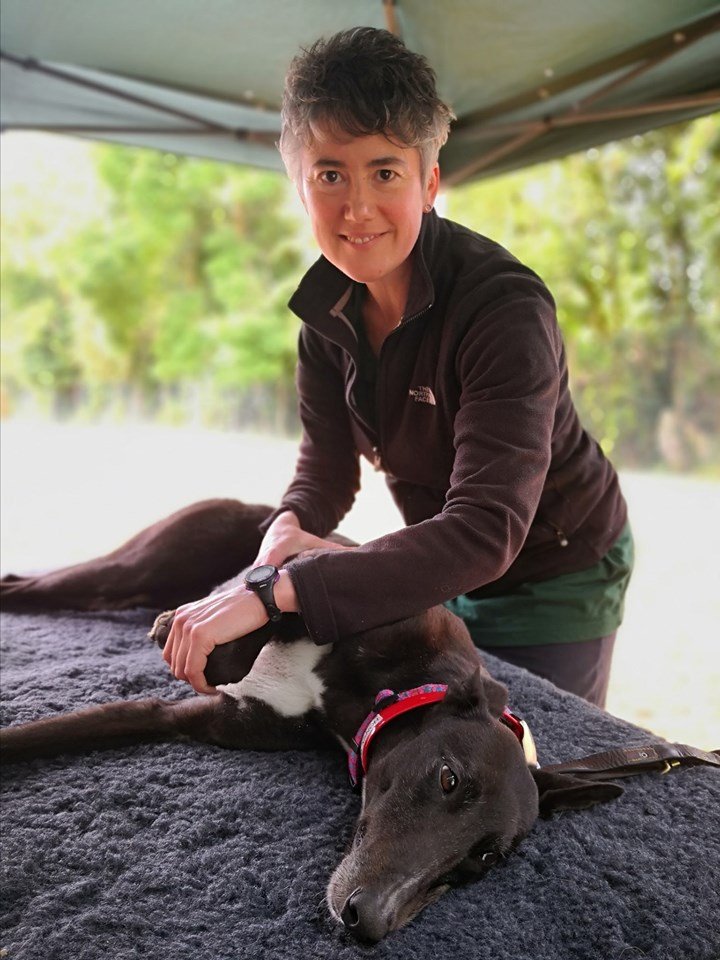

Clinical Canine Massage Therapist Nia Ball
Pentland Canine Massage is run by Nia, who is passionate about using massage therapy to ease discomfort and pain and to aid recovery in dogs. Nia trained for two years with the Canine Massage Therapy Centre. She is happy to discuss if your dog would benefit from massage.